|
|

|
Boginfo |
|
| |
|
|
|
|
Museum Tusculanums Forlag bruger cookies for at huske dine indstillinger. Ved at bruge sitet accepterer du dette. Accepter cookies
|
| |
 Nyhedsbrev Nyhedsbrev
 Print siden Print siden
Stark, Laura
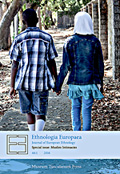
Ethnologia Europaea vol. 46:1.Special Issue: Muslim Intimacies
2016, 131 sider, hft. ISBN 978-87-635-4487-0
Tidsskrift: Ethnologia Europaea
ISSN 0425-4597
2016
|
|
0
|
Vejl. pris150 DKK 23 $ 20 € 18 £
|
|
Onlinepris120 DKK 18 $ 16 € 14 £
|
|
|
Må du bare eje denne bog?
Man kan desværre ikke købe direkte i vores webshop lige nu da den betalingsløsning vi tidligere har anvendt, er lukket; en ny og bedre hjemmeside er under udvikling.
Indtil videre kan man bestille bøger på den gammeldags maner, ved at skrive til order@mtp.dk.
Husk i bestillingen at angive modtagerens navn, forsendelsesadresse og mobilnummer (samt mailadresse hvis modtageren er en anden end dig selv).
Bestillinger sendes med PostNord, som udgangspunkt som pakker til afhentning i pakkeshop eller pakkeboks/nærboks; læs mere her. Hvis du behøver levering til døren eller ikke har mulighed for at hente fra pakkeboks/nærboks, så angiv også det i din bestilling.
|
▼ Din mening
▼ Kunder, som har købt denne titel, købte også
In every society, individual choice and freedom are shaped
at least to some degree by the needs of familial and marital
institutions. Currently, negotiations between individuals and
families are undergoing transformations due to late modern
processes such as recent waves of mass migration, the increasing
transnationalism of everyday practices, global commerce in
ideas and images, and the expansion of information technology
into all corners of people’s lives. Some of the greatest challenges
are experienced by Muslim families; the majority of the world’s
Muslims live in extreme poverty, and in Europe, anti-Muslim
sentiment has found a firm foothold in public attitudes and
debates.
This special issue explores the dilemmas facing transnational
Muslim families as well as those who feel the impact of late
modern transformations in societies where they have lived
for generations. Five scholarly articles address family
dynamics among Muslims in Finland (Anne Häkkinen),
Ethiopia (Outi Fingerroos), Italy and Sweden (Pia Karlsson
Minganti), Morocco (Raquel Gil Carvalheira), and Tanzania
(Laura Stark); these are complemented by the insightful
commentary by Garbi Schmidt. The aim of this theme issue
is to develop new ways of talking about the links between
Islam, family and the individual, which move away from the
ethnocentrism of Western concepts and pay greater attention
to the desires and goals of those studied.
This volume includes two open issue contributions: Magdalena
Elchinova scrutinizes identity construction among Orthodox
Bulgarians based in Istanbul, and in the context of the post-
Fordist “creative city” Ove Sutter analyses the playful and
performative protests of activists following the declaration
of the so-called Danger Zone 2014 in Hamburg, Germany.
Laura Stark er professor i etnologi ved Jyväskylä Universitet i Finland. Hendes forskning fokuserer på finsk folkekultur og -religion, herunder især magi og overtro samt kønsroller.
In every society, individual choice and freedom are shaped
at least to some degree by the needs of familial and marital
institutions. Currently, negotiations between individuals and
families are undergoing transformations due to late modern
processes such as recent waves of mass migration, the increasing
transnationalism of everyday practices, global commerce in
ideas and images, and the expansion of information technology
into all corners of people’s lives. Some of the greatest challenges
are experienced by Muslim families; the majority of the world’s
Muslims live in extreme poverty, and in Europe, anti-Muslim
sentiment has found a firm foothold in public attitudes and
debates.
This special issue explores the dilemmas facing transnational
Muslim families as well as those who feel the impact of late
modern transformations in societies where they have lived
for generations. Five scholarly articles address family
dynamics among Muslims in Finland (Anne Häkkinen),
Ethiopia (Outi Fingerroos), Italy and Sweden (Pia Karlsson
Minganti), Morocco (Raquel Gil Carvalheira), and Tanzania
(Laura Stark); these are complemented by the insightful
commentary by Garbi Schmidt. The aim of this theme issue
is to develop new ways of talking about the links between
Islam, family and the individual, which move away from the
ethnocentrism of Western concepts and pay greater attention
to the desires and goals of those studied.
This volume includes two open issue contributions: Magdalena
Elchinova scrutinizes identity construction among Orthodox
Bulgarians based in Istanbul, and in the context of the post-
Fordist “creative city” Ove Sutter analyses the playful and
performative protests of activists following the declaration
of the so-called Danger Zone 2014 in Hamburg, Germany. |
|
|
Indlæg offentliggøres med navn og e-mail. Forlaget forbeholder sig ret til at redigere og udelade indlæg.Kunder, som har købt denne titel, købte også
|
|
|
|
|
|
|
|
|
|
|