|
|

|
Boginfo |
|
| |
|
|
|
|
Museum Tusculanums Forlag bruger cookies for at huske dine indstillinger. Ved at bruge sitet accepterer du dette. Accepter cookies
|
| |
 Nyhedsbrev Nyhedsbrev
 Print siden Print siden
|
|
|
0
|
Vejl. pris75 DKK 11 $ 10 € 9 £
|
|
Onlinepris60 DKK 9 $ 8 € 7 £
|
|
|
Må du bare eje denne bog?
Man kan desværre ikke købe direkte i vores webshop lige nu da den betalingsløsning vi tidligere har anvendt, er lukket; en ny og bedre hjemmeside er under udvikling.
Indtil videre kan man bestille bøger på den gammeldags maner, ved at skrive til order@mtp.dk.
Husk i bestillingen at angive modtagerens navn, forsendelsesadresse og mobilnummer (samt mailadresse hvis modtageren er en anden end dig selv).
Bestillinger sendes med PostNord, som udgangspunkt som pakker til afhentning i pakkeshop eller pakkeboks/nærboks; læs mere her. Hvis du behøver levering til døren eller ikke har mulighed for at hente fra pakkeboks/nærboks, så angiv også det i din bestilling.
|
 Se udvalgte sider Se udvalgte sider
Indholdsfortegnelse
▼ Din mening
▼ Kunder, som har købt denne titel, købte også
Fås også som e-tidsskrift
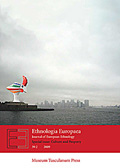
Culture and property have increasingly fused into
one concept as the circulation of practices and
objects that ethnologists have defined as cultural is
brought within the purview of markets and state
regulative systems.
Ethnological analyses of the
cultural distinctiveness of regions and nations and
the foregrounding of folklore as an index of local
genius helped foster a patrimonial regime in the
20th and 21st centuries, that converts artifacts and
expressions to cultural property and heritage.
While
sometimes used synonymously, cultural property
and cultural heritage have distinct connotations and
are associated with separate legal regimes and
different manners of staking claims to culture. At
once legal and ethical, economic and emotional,
scientific and sensory, the patrimonial regime is in
rapid expansion both across and within global
societies.
The articles in this issue of Ethnologia
Europaea explore this regime from various vantage
points with theoretical sophistication and richness
of detail, analyzing invocations of cultural heritage
and cultural property in localized settings and on
international stages, combining ethnographic
research and document analysis in case studies from
around the European continent – Italy, Belgium,
Spain, Norway, Denmark, Estonia – and beyond.
|
|
|
Indlæg offentliggøres med navn og e-mail. Forlaget forbeholder sig ret til at redigere og udelade indlæg.Kunder, som har købt denne titel, købte også
|
|
|
|
|
|
|
|
|
|
|